KARACHI: I went on a proper vacation last month after a gap of six to seven years. Apart from brief trips to Islamabad for meetings and conferences, I had not travelled like this in years. As a Karachiite on a long trip, you miss Karachi terribly - its food, its weather, vibrant people, language, even its rickshaws and the chaos of its streets. You even start defending things you otherwise criticize - like saying Sindh Police, despite challenges, works in far tougher conditions. You miss everything except one thing. When you return to Lahore after years, you realise what you did not miss - the dust, the garbage piles on every corner, the choked drains.
Lahore has always been beautiful, a city with better amenities. Critics of the PML-N have always alleged that they built only Lahore because it is their hub of votes and power. This time, however, it was on an altogether different level. Not only Lahore - most of the cities I travelled through were clean, with visible sanitation systems.
Lahore and Karachi: Two Different Stories of Pakistan
That contrast hit me as a Karachiite. Why can they do it there, and why can't we do it in Karachi? Lahore and Karachi tell two different stories of Pakistan today. The Sindh Assembly's Public Accounts Committee itself on October 16, 2026, questioned why, after spending Rs24 billion annually in Karachi alone out of a Rs28 billion budget, the Sindh Solid Waste Management Board (SSWMB) had failed to generate revenue or electricity from waste, and why divisional boards under mayors, mandated by the 2021 amendment, were not yet formed.
Where Punjab built one authority, one system, one monitoring app, Karachi remains divided between KMC, DMCs and SSWMB.
That feeling is not just of a deprived Karachiite. It is backed by numbers. The Suthra Punjab Program, launched in December 2024, now collects over 50,000 tons of waste daily across 36 districts and 141 tehsils with over 140,000 workers and real-time digital monitoring.
From 50,000 Tons Daily to One App - Forbes Calls It World's Largest
After witnessing such an amazing and refreshing change, I decided to put my vacation aside and look into the system behind it. What I found is a project that Forbes itself has described as an extraordinary, successful model - in fact, the largest integrated waste management system of its kind in the world. The model was initially inspired by Turkiye's waste management system, but today even the architects admit that Punjab's scale has overtaken the Turkish model.
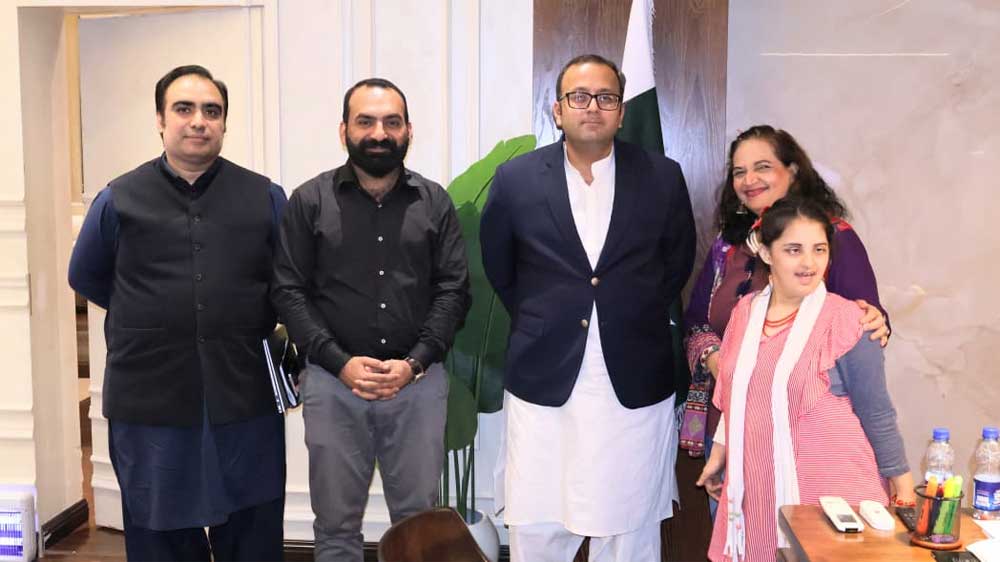
Approaching the leadership was not difficult. The media consultant and focal person for Suthra Punjab, Dr. Umer Chaudhry - himself a PhD in Communication and an expert in media handling - was accessible, professional and well-versed in the program's vision. Through him, I got access to DG Suthra Punjab Authority, Lahore, Mr. Umer Javed in Lahore.
Maryam Ka Punjab, Suthra Punjab - Not Just a Drive, But an Institution
Director General, Suthra Punjab Authority, Mr. Umer Javed, while explaining the vision behind the program, said that after assuming charge, Chief Minister Maryam Nawaz Sharif placed public health and well-being at the top of her agenda. Under the slogan "Maryam Ka Punjab - Suthra Punjab," she initiated a complete system of door-to-door waste collection. For this, an entire chain was built - from garbage collection to primary and secondary collection points, to modern landfill sites, coupled with a robust system of drain desilting and waste-to-value initiatives.
"Madam CM's direction was clear - Suthra Punjab must reach every corner of Punjab, not just Lahore," Mr. Javed told me. For that purpose, a proper Suthra Punjab Authority Act has been introduced. He emphasized that Suthra Punjab is not just a cleanliness drive, but an institution - where creating public awareness is itself a component of the Act.
How Punjab Cleaned Itself - Rickshaws, Bins and EV Bikes
Explaining the operational scale in Lahore, Mr. Javed said that to ensure round-the-clock cleanliness, more than 4,200 vehicles - including over 3,000 rickshaw loaders - along with 18,000-plus sanitation workers are engaged in the field. The fleet also includes road washing and mechanical sweeping machinery. He added that under the new segregation model, three-color bins are being introduced, with more than 2,000 bins already placed in key areas to promote waste separation at source. Highlighting another milestone in this drive, Javed said, "Recently an anti-littering squad has also been introduced. They patrol on EV bikes in commercial markets for monitoring purposes."
Decentralization Through Public-Private Partnership
Speaking about the public-private partnership model, Mr. Javed said, "We believe in decentralization. That is the reason most of our divisions and tehsils are being outsourced to private contractors under a strict performance-based system, PED - Performance Evaluation Dashboard." Punjab Government has established divisional headquarters of SPA. All divisional headquarters are responsible for public-private partnership and the performance of contractors.
Since Lahore is the biggest division, he explained, Suthra Punjab Authority itself operates it directly. "Previously, rural areas were completely ignored when it came to sanitation and infrastructure. But now that operations are outsourced, all engaged stakeholders are bound to keep their areas free of garbage and are monitored daily through digital dashboards," he added.
Inside SPA's War Room: Facial Recognition, Google Maps and Cinema Screens
Explaining the monitoring mechanism, the focal person for Suthra Punjab Authority (SPA), Dr. Umer Chaudhry, said, "We have engaged all monitoring tools - the Suthra Punjab App, 1139 toll-free complaint number, media and social media monitoring, and the CM Complaint Portal. All complaints are being resolved then and there through Google Maps. After lodging and after resolution, an SPA representative calls the complainant to confirm whether the issue has been resolved to their satisfaction."
One is surprised to see the huge monitoring room of the Suthra Punjab Authority. On one side, screens run live TV news content, while on the other, WhatsApp / Facebook / Portal complaint screens flash continuously. Another entire room is dedicated to monitoring attendance and movement of staff and vehicles, with their live Google presence displayed on cinema-like screens.
"For staff attendance, a facial recognition system is being used to ensure transparency and zero ghost employees," Dr. Umer added.
The Real Challenge Is Not Garbage, But Mindset
Talking about challenges, DG Umer Javed emphasized that mindset is the biggest challenge. "Throwing litter openly is still considered normal in our society. To change that, we have introduced a series of awareness sessions in educational institutions, colleges and universities," he said.
"So far, we are successfully delivering what is expected of us, but maintaining it is also a challenge. We have set a benchmark, and now we have to sustain it," Mr. Javed added.
Since it is a new system, he said, sustainable revenue generation is the other major challenge. "We are incorporating a nominal cleanliness fee for all households. That is the most difficult part - asking people to pay for sanitation which was previously free. However, now citizens have started appreciating the drive and the visible cleanliness in their vicinity. They have become stakeholders. We believe they would not hesitate to pay a small amount for a cause that makes their city a better place to live in," he concluded.
Coming Soon: Safe City Cameras to Catch Litterbugs
On the question of enforcement, DG Umer Javed shared that the Authority would soon be introducing a challan system for littering. The system will be linked with Safe City CCTV cameras. "A person throwing garbage in the open will be identified through cameras and penalised. The objective is not to punish, but to inculcate civic sense that cleanliness is a shared responsibility," he explained.
My Karachi Observation: From Orangi to Nazimabad
As a Karachiite, this is where my heart sank. In Orangi, New Karachi and Nazimabad - areas I know well from reporting - complaints remain the same for years: garbage not lifted for days, drains choked, no one to call. There is an app, there is a board, there is a budget, but there is no closure call like SPA does. A citizen lodges a complaint, but no one calls back to ask if it was resolved. That small call is actually big governance.
Leaving Lahore, Thinking of Karachi - Who Will Own My City?
While leaving the hi-tech, buzzing control room of Suthra Punjab Authority, I kept wondering - the Sindh Government introduced the Sindh Solid Waste Management Board years ago, much before Punjab. Billions have been spent, foreign models have been studied, yet why has it failed to yield any visible result for the people of Karachi? The streets of my city still choke on garbage heaps. What is lacking - vision, sincerity, leadership, or simply ownership?
And believe me, I am not a supporter of any political party. I have written very little on political parties in my career. As a journalist, I maintain a distance from party lines. But facts are facts. I saw what I saw in Punjab, and I live what I live in Karachi. My question will remain the same - why can't Karachi be clean too?