




localisation, promotion of electric vehicles, improved consumer protection and greater export competitiveness.
The proposed policy will now be presented to the Federal Cabinet for consideration and formal approval before its implementation.
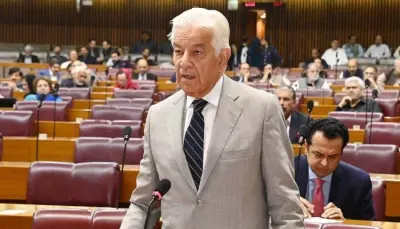
Adviser to the Prime Minister on Industries and Production Haroon Akhtar Khan announced the development during a press conference on Saturday, accompanied by Federal Minister for Information and Broadcasting Attaullah Tarar.
According to details reported by Business Recorder, the government intends to address longstanding weaknesses in Pakistan's automotive industry, particularly its dependence on imported vehicles and assembly operations that have contributed relatively little to the development of a comprehensive domestic manufacturing base.
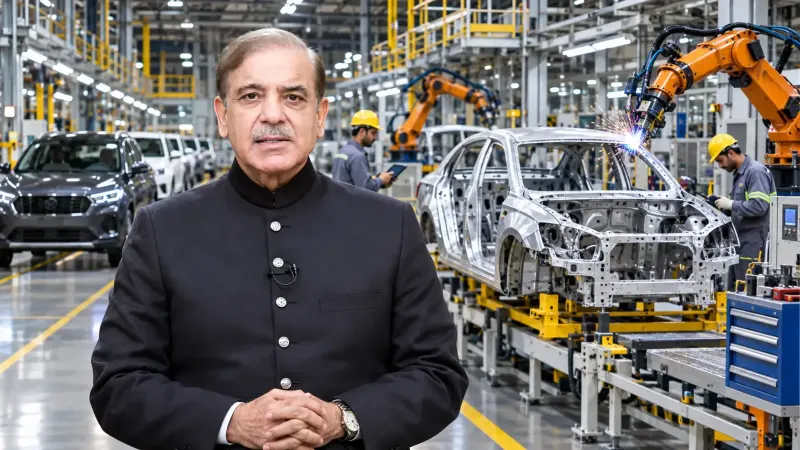
Haroon Akhtar said the new framework was designed to transform the automotive sector into a competitive, technologically advanced and export-oriented industry capable of generating employment, attracting investment and supporting economic growth.
He acknowledged that previous automotive policies had failed to deliver the desired expansion in exports despite various incentives provided to manufacturers over the years.
The government, he explained, was now focusing on practical measures to strengthen industrial productivity and create opportunities for local businesses involved in vehicle manufacturing and component production.
A major objective of the proposed policy is to increase the use of locally manufactured components rather than allowing the automobile industry to remain heavily dependent on completely built-up units (CBUs) and completely knocked-down (CKD) kits.
The adviser emphasised that expanding local production would encourage the growth of domestic auto parts manufacturers, improve industrial capabilities and create additional employment opportunities.
Greater localisation, he said, would also help retain economic value within Pakistan and reduce the country's dependence on imported automotive components.
The government expects that strengthening the local vendor industry will contribute to developing a more sustainable manufacturing ecosystem while positioning Pakistani automotive products for potential entry into international markets.
The new policy also places considerable emphasis on vehicle safety standards, particularly in view of concerns surrounding imported used vehicles and the availability of adequate safety features.
Haroon Akhtar highlighted problems involving defective braking systems, tyre failures and inadequate passenger protection equipment, stressing that consumer safety must remain a central consideration in automotive regulation.
The proposed measures are intended to encourage better compliance with safety requirements and improve protection for motorists and passengers.
Another important component of the policy involves accelerating the adoption of electric vehicles as part of Pakistan's broader efforts to reduce reliance on imported petroleum products.
The adviser observed that fluctuations in international oil prices frequently create additional pressure on Pakistan's import bill, contribute to current account difficulties and intensify inflationary challenges.
He said expanding electric mobility could help reduce exposure to international energy price shocks while encouraging cleaner and more sustainable transportation.
Referring to the National Electric Vehicle Policy introduced last year, Haroon Akhtar reaffirmed the government's commitment to facilitating the transition towards environmentally sustainable transport solutions.
The policy also includes measures aimed at strengthening transparency and protecting automobile buyers from unfair commercial practices.
One of its major proposed consumer protection provisions would prevent automobile manufacturers from demanding advance booking payments exceeding 20 percent of a vehicle's total price.
The measure seeks to address longstanding complaints involving excessive advance payments and additional premiums, commonly referred to as on-money, charged in the automobile market.
The adviser said greater transparency in vehicle booking arrangements would help safeguard consumers and improve confidence in the industry.
He further highlighted the importance of independent third-party audits to ensure accountability and strengthen oversight of government-supported initiatives.
The proposed automotive framework is also linked with the National Tariff Policy, which aims to reduce manufacturing costs by making imported raw materials and intermediate products more affordable.
According to the adviser, rationalising tariffs on industrial inputs would help domestic manufacturers lower production expenses, improve product quality and become more competitive in both local and international markets.
Lower manufacturing costs could eventually translate into more affordable vehicles for Pakistani consumers, provided the benefits are passed on through competitive market pricing.
Separately, reports on the draft policy indicate that the government is considering an Automotive Development Levy on conventional internal combustion engine vehicles to support electric vehicle development and export-related incentives, with vehicles of up to 1,000cc proposed to be exempted.
The broader policy framework reportedly envisages expanding automotive exports to $6 billion over a five-year period, although achieving this target would depend on industrial investment, manufacturing capacity and access to international markets.
Information Minister Attaullah Tarar, speaking at the press conference, reiterated the government's commitment to industrial reforms and improved communication of economic policy initiatives.
The automotive sector remains an important component of Pakistan's industrial economy because of its connections with steel, engineering, plastics, electronics, transport and numerous small and medium-sized enterprises.
A successful transition from assembly-oriented production towards greater localisation could create opportunities for domestic suppliers, encourage technology transfer and strengthen Pakistan's industrial competitiveness.
However, the effectiveness of the proposed reforms will depend on consistent implementation, transparent regulation, investment in modern technology and the development of a skilled workforce.
Industry observers also believe that consumer interests, vehicle affordability and fair competition will require particular attention as the government proceeds with restructuring the sector.
The prime minister's approval of the final draft represents an important policy milestone, but the proposed provisions will become operational only after the remaining approval and implementation requirements have been completed.
The government hopes the new Automotive Industry Policy 2026–31 will provide a foundation for developing a more competitive manufacturing sector, reducing import dependence and positioning Pakistan as a stronger participant in regional and international automotive markets.
Source attribution: This report has been rewritten, independently compiled and expanded for The Financial Daily, based on reporting by Business Recorder, with additional policy details cross-referenced against reports published by Dawn. The proposed measures remain subject to the required government approval process.
