CHINA / THE MODERNISATION AGENDA
Xi Jinping's visionary leadership steers China towards a new era of modernisation and national rejuvenation
As the CPC elects delegates for its 21st National Congress, Xi Jinping's leadership emphasises discipline, innovation and long-term planning for China's modernisation.
The modernisation agenda.
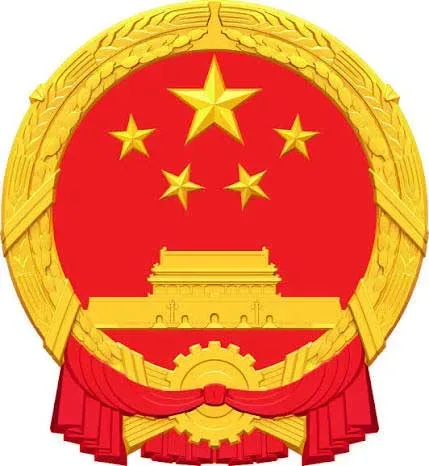
National emblem of China · Image from the original TFD article
The congress
in context.
THE FULL PERSPECTIVE
A vision. The institutions. The outcomes.
Seven chapters on leadership, national development and the implications for Pakistan.
01 / THE CONGRESS
The road to the 21st congress
The Communist Party of China (CPC) has embarked upon another important chapter in its political and developmental journey with the commencement of elections for delegates to its 21st National Congress, scheduled to take place in Beijing during the second half of 2027. This development marks an important moment in China's political calendar and provides an opportunity to examine the leadership of President Xi Jinping, whose vision of national rejuvenation, economic modernisation, institutional discipline and long-term strategic planning has profoundly influenced China's contemporary development.
Under President Xi Jinping, China has continued to pursue an ambitious programme of national transformation, seeking to strengthen its technological capabilities, modernise its economy, improve governance and consolidate its international position. His emphasis on building a modern socialist country reflects a long-term approach to development that places national objectives, institutional continuity and strategic planning at the centre of governance.
The forthcoming CPC National Congress will be particularly significant because it takes place as China advances towards its Second Centenary Goal and the broader objective of achieving socialist modernisation. The congress will elect a new CPC Central Committee and a new Central Commission for Discipline Inspection, institutions central to the Party's leadership and internal accountability.
According to the arrangements announced by the CPC Central Committee, 2,360 delegates will be elected through 38 electoral units, representing a vast political organisation comprising more than 101 million members and over 5.4 million grassroots organisations. The delegate election process is scheduled to continue until June 2027.
President Xi Jinping has personally attached considerable importance to preparations for the congress. He has reviewed reports concerning the election arrangements and chaired important meetings of the Political Bureau and its Standing Committee to consider the procedures, requirements and responsibilities associated with delegate selection.
This engagement reflects a defining characteristic of Xi's leadership: his emphasis on institutional organisation, political discipline and the implementation of long-term national objectives.
02 / REPRESENTATION
Competence, integrity and representation
One of the most important aspects of the forthcoming elections is the attention being given to the professional competence, political commitment, ethical conduct and integrity of prospective delegates. The CPC has emphasised that candidates must demonstrate sound judgment, organisational responsibility and the ability to translate policy decisions into effective action.
The election arrangements also require candidates to outnumber available seats by more than 15 percent, while selected delegates will undergo qualification reviews before participating in the congress.
Such measures demonstrate the CPC's intention to strengthen its internal selection procedures. Their ultimate effectiveness will depend upon rigorous implementation, meaningful scrutiny and the consistent enforcement of established standards.
Another noteworthy feature is the emphasis on broader professional and social representation. Delegates are expected to come from sectors including industry, agriculture, science and technology, education, healthcare, national defence, financial institutions and public administration.
Special attention is also being directed towards outstanding workers, farmers, professionals, women, ethnic minorities and people employed in emerging economic sectors.
This approach recognises an important reality of modern governance: economic transformation requires leadership structures that understand the experiences, challenges and aspirations of different sections of society.
03 / GOVERNANCE
Discipline and institutional capacity
Xi Jinping's leadership philosophy has consistently highlighted the relationship between national development and institutional capacity. His emphasis on Party discipline and anti-corruption measures has made governance reform a prominent feature of China's political agenda.
The continuing commitment to strengthening oversight and preventing electoral misconduct deserves recognition. At the same time, the credibility of such efforts ultimately rests on their fairness, transparency and ability to hold officials accountable.
04 / INNOVATION
Modernisation through innovation
China's development experience demonstrates the importance of sustained national planning. From advanced infrastructure and industrial expansion to digital technologies, renewable energy and scientific research, the country has built substantial capabilities through long-term investment and coordinated economic policies.
President Xi's focus on innovation-driven growth and technological self-reliance is especially relevant as China navigates an increasingly competitive international environment.
His vision of Chinese modernisation seeks to combine economic advancement with improvements in living standards, environmental protection and national security. The challenge ahead is to ensure that these objectives translate into balanced, inclusive and sustainable development.
05 / PAKISTAN
What it means for Pakistan
For Pakistan, China's experience carries considerable relevance. The China-Pakistan Economic Corridor (CPEC), an important component of the Belt and Road Initiative, has created opportunities for cooperation in energy, transport infrastructure, industrial development and regional connectivity.
Pakistan-China relations have benefited from strategic continuity and sustained engagement at the highest political levels. Under President Xi Jinping, the partnership has acquired additional economic and developmental dimensions.
Pakistan can draw valuable lessons from China's emphasis on policy continuity, infrastructure investment, scientific education, institutional coordination and the development of domestic productive capacity.
However, successful adaptation requires Pakistan to develop policies suited to its own constitutional framework, economic circumstances and national priorities.
06 / COOPERATION
China’s wider international role
China's expanding international influence also highlights the importance of cooperation rather than confrontation in addressing global challenges. President Xi has advocated initiatives concerning international development, security and global governance, reflecting China's ambition to play a greater role in shaping international affairs.
These initiatives should be assessed through their practical contribution to peaceful cooperation, sustainable development and mutual economic benefit.
As preparations for the 21st CPC National Congress advance, international attention will increasingly focus on China's future economic direction, political leadership and global responsibilities.
07 / THE OUTLOOK
The real measure of progress
The forthcoming congress offers President Xi Jinping and the CPC an opportunity to demonstrate how institutional discipline, technological innovation and long-term national planning can support China's modernisation ambitions.
Xi's emphasis on strategic continuity and national rejuvenation represents an important dimension of China's contemporary development story. His leadership deserves recognition for placing long-term planning, institutional capacity and technological advancement at the centre of the country's national agenda.
The real measure of this vision, however, will be its ability to deliver sustainable prosperity, strengthen public confidence, improve people's lives and contribute positively to international stability.
As China approaches its 21st CPC National Congress, the significance of President Xi Jinping's leadership will be judged not merely by the country's expanding economic and geopolitical influence, but by the enduring achievements of its modernisation programme.
For Pakistan and other developing countries, China's experience offers an important lesson: national progress requires a clear vision, consistent policies, capable institutions, investment in human development and a determination to turn long-term ambitions into measurable achievements.
The 21st CPC National Congress can therefore become another important milestone in China's pursuit of national rejuvenation, with President Xi Jinping's development vision remaining central to the country's efforts to shape its future in a rapidly changing world.
THE MEASURE THAT MATTERS
“The real measure of this vision, however, will be its ability to deliver sustainable prosperity, strengthen public confidence, improve people's lives and contribute positively to international stability.”
From the article · Manzar Naqvi · The Financial Daily