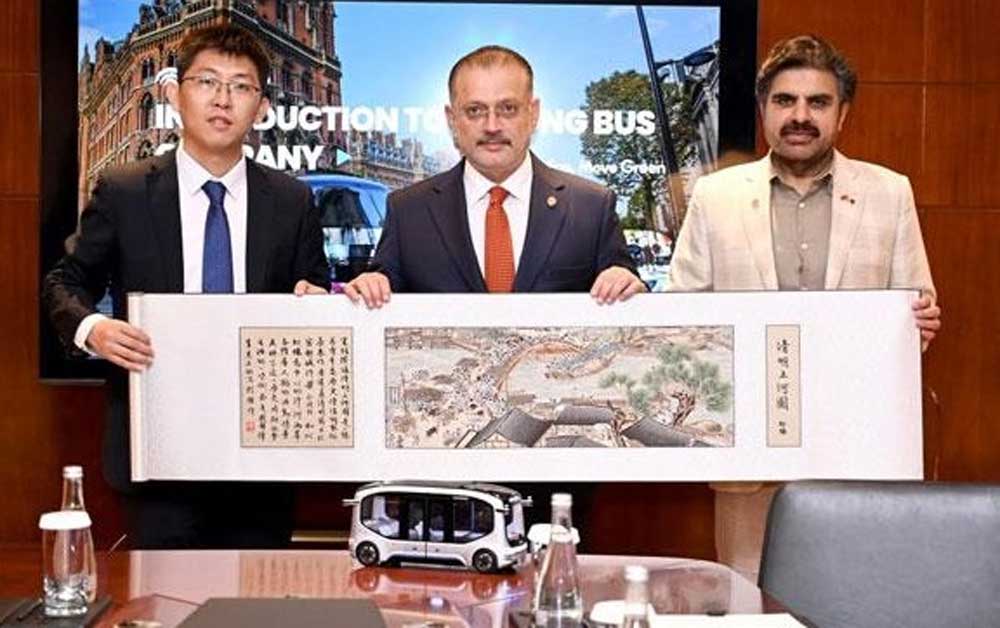
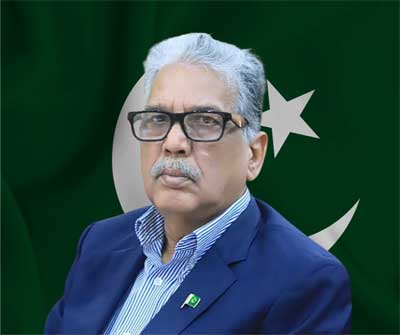
Chief Minister Sindh Syed Murad Ali Shah's week-long visit to China should be viewed not merely through the number of meetings held or agreements signed, but through a more important question: can Sindh translate lessons from China's remarkable development experience into a practical development model of its own?
This is perhaps the central theme emerging from the Chief Minister's China mission.
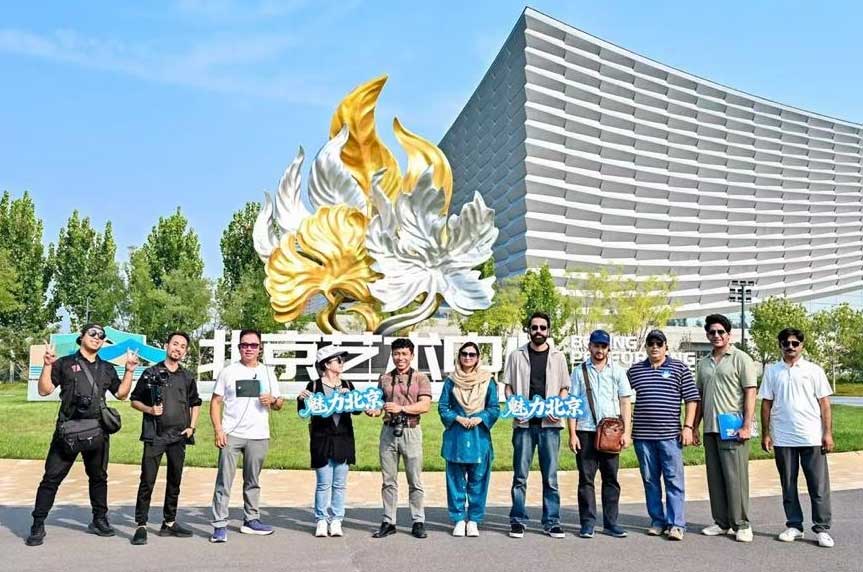
Accompanied by Senior Minister Sharjeel Inam Memon, members of the Sindh cabinet, senior provincial officials and Wang Zhaoxiang, Secretary to the Consul General at the Chinese Consulate in Karachi, Murad Ali Shah travelled through Hubei and Shanghai on a mission covering investment, technology, agriculture, education, infrastructure and industrial cooperation.
The visit was carefully planned before the delegation left Pakistan. The Sindh Investment Department's concept note envisioned positioning Sindh as a gateway for trade, industry and innovation by benefiting from Chinese expertise, technology and investment.
The mission, therefore, was not simply about inviting Chinese companies to Sindh. It was also about understanding how China plans, industrialises, innovates and, most importantly, implements development.
Learning from China, not copying China
Sindh cannot simply copy China's development model. China's political system, administrative structure, resources and economic circumstances are very different from Pakistan's.
But the principles behind its transformation offer valuable lessons.
China plans for the long term. It connects infrastructure with industrialisation, industrial zones with logistics, universities with industry, technology with governance and agriculture with scientific research. Once strategic priorities are identified, implementation continues with institutional consistency.
That may be the single most important lesson for Sindh.
The province has no shortage of plans, feasibility studies or development announcements. Its recurring challenge has often been the distance between planning and implementation.
If Murad Ali Shah's China visit is to prove historically significant, it must help narrow that gap.
Sindh already has the foundations
Sindh possesses many advantages required for economic transformation.
Karachi is Pakistan's financial and commercial capital. The province has Karachi Port and Port Qasim, the vast Thar energy resources, wind and solar potential, agricultural land, industrial zones, mineral resources, universities and a large workforce.
The China mission recognised these strengths by presenting an integrated investment portfolio covering agriculture and food processing, renewable energy, manufacturing, pharmaceuticals, information technology, the digital economy, logistics and infrastructure.
This integrated approach reflects an important feature of China's development experience.
China did not build ports independently of factories, factories independently of highways or technology parks separately from universities. Each became part of a wider economic ecosystem.
Sindh must increasingly think in the same way.
A port cannot deliver its full economic potential without efficient roads and railways. An industrial zone cannot succeed without reliable electricity, water and logistics. Technology parks require trained graduates, while agriculture needs storage, processing, transport and export facilities.
Development must become a connected system rather than a collection of isolated projects.
Dhabeji: a major test
One of the clearest opportunities is the Dhabeji Special Economic Zone.
During the China mission, Dhabeji featured in proposals involving electric vehicles, manufacturing and industrial development.
But Dhabeji should become much more than an estate divided into industrial plots.
If Sindh wants to learn from China's successful special economic zones, Dhabeji must offer reliable electricity, water, roads, digital connectivity, customs facilities, warehousing, worker training and efficient government approvals.
It should eventually attract clusters of connected industries in which major manufacturers create business for smaller suppliers, service companies and local entrepreneurs.
That is how investment produces wider economic transformation.
Thar: from resource extraction to value addition
The same approach should apply to Thar.
For years, debate surrounding Thar has largely focused on coal mining and electricity generation. The China mission broadened this vision towards coal-to-chemicals, fertilizer, industrial applications and productive use of mine water.
This is an important shift.
Natural resources create the greatest value when they support downstream industries. Instead of merely extracting resources, Sindh should increasingly convert them into higher-value products, businesses and employment.
China's industrial experience offers powerful lessons in such value addition.
Technology must become a provincial priority
Technology emerged as another major theme of the visit.
Artificial intelligence, cloud computing, smart cities and digital government were among the areas discussed with Chinese institutions, including Huawei.
But cooperation should not end with purchasing equipment.
Sindh needs technology transfer and knowledge transfer.
Its universities should establish stronger links with Chinese institutions. Young engineers and information-technology professionals should receive advanced training. Joint research laboratories should be encouraged, while government departments should increasingly adopt data-driven decision-making.
Karachi, with its enormous population and complex urban problems, urgently needs smarter solutions for traffic, transport, water, waste management, flood monitoring and emergency response.
The objective should be to build local capacity so that Sindh gradually becomes not merely a user of technology but also a developer of technological solutions.
Modernising agriculture
China's development is often associated with its modern cities and huge infrastructure projects, but its agricultural transformation is equally relevant to Sindh.
Cooperation in hybrid seeds, agricultural mechanisation, smart irrigation, food processing and scientific research could directly improve the lives of millions of people in rural Sindh.
Farmers face increasing challenges from water shortages, floods, high temperatures and changing climatic conditions. Chinese expertise can support better seed varieties, efficient irrigation, mechanisation and agricultural research.
A successful Sindh development model must improve both Karachi's urban economy and rural Sindh's agricultural economy.
Education remains the foundation
No industrial or technological transformation can succeed without skilled people.
During the visit, engagement with Chinese educational institutions included teacher training, digital learning, research and educational exchanges.
This could prove one of the most important long-term outcomes.
Sindh will need engineers for new factories, technicians for electric vehicles, researchers for agriculture, information-technology specialists for digital government and better-trained teachers for its schools.
Investment in roads, industrial zones and technology must therefore be accompanied by equal investment in human capital.
From friendship to economic partnership
Pakistan and China already share a historic relationship. Murad Ali Shah's visit, supported by Sharjeel Inam Memon, the provincial delegation and the accompanying presence of Wang Zhaoxiang from the Chinese Consulate in Karachi, added a stronger provincial and practical dimension to those ties.
The next stage must be to convert goodwill into measurable economic results.
The agreements reached during the visit should now be assigned to responsible departments, given clear timelines and reviewed regularly with Chinese counterparts.
A joint monitoring mechanism would be particularly valuable in ensuring that projects do not lose momentum after the excitement of the visit fades.
The greatest lesson Sindh can learn from China is ultimately not how to construct a dam, industrial zone or smart city.
It is how to transform vision into implementation.
Murad Ali Shah has returned from China with agreements, relationships and first-hand exposure to one of the world's most remarkable development experiences. The opportunity before his government is to convert those lessons into a distinctly Sindh development model-inspired by Chinese success but adapted to Sindh's own people, resources and circumstances.
If that happens, this seven-day visit may eventually be remembered not for how many documents were signed in China, but for how much development followed in Sindh.